AI Memory Sells Out, Driving Prices to Record Highs
All kinds of computers rely on RAM for short‑term data storage, but in 2026 there is not enough supply to satisfy global demand because AI chips from Nvidia, AMD and Google are consuming huge volumes of advanced memory and get priority access. Major suppliers Micron, SK Hynix and Samsung dominate the RAM market, and the surge in AI demand is driving sharp growth in their revenue, profits and stock prices. Industry executives from Micron say demand has vastly outstripped what they and the rest of the sector can produce, and research firm TrendForce describes current RAM price increases of roughly 50% or more quarter‑over‑quarter as unprecedented.
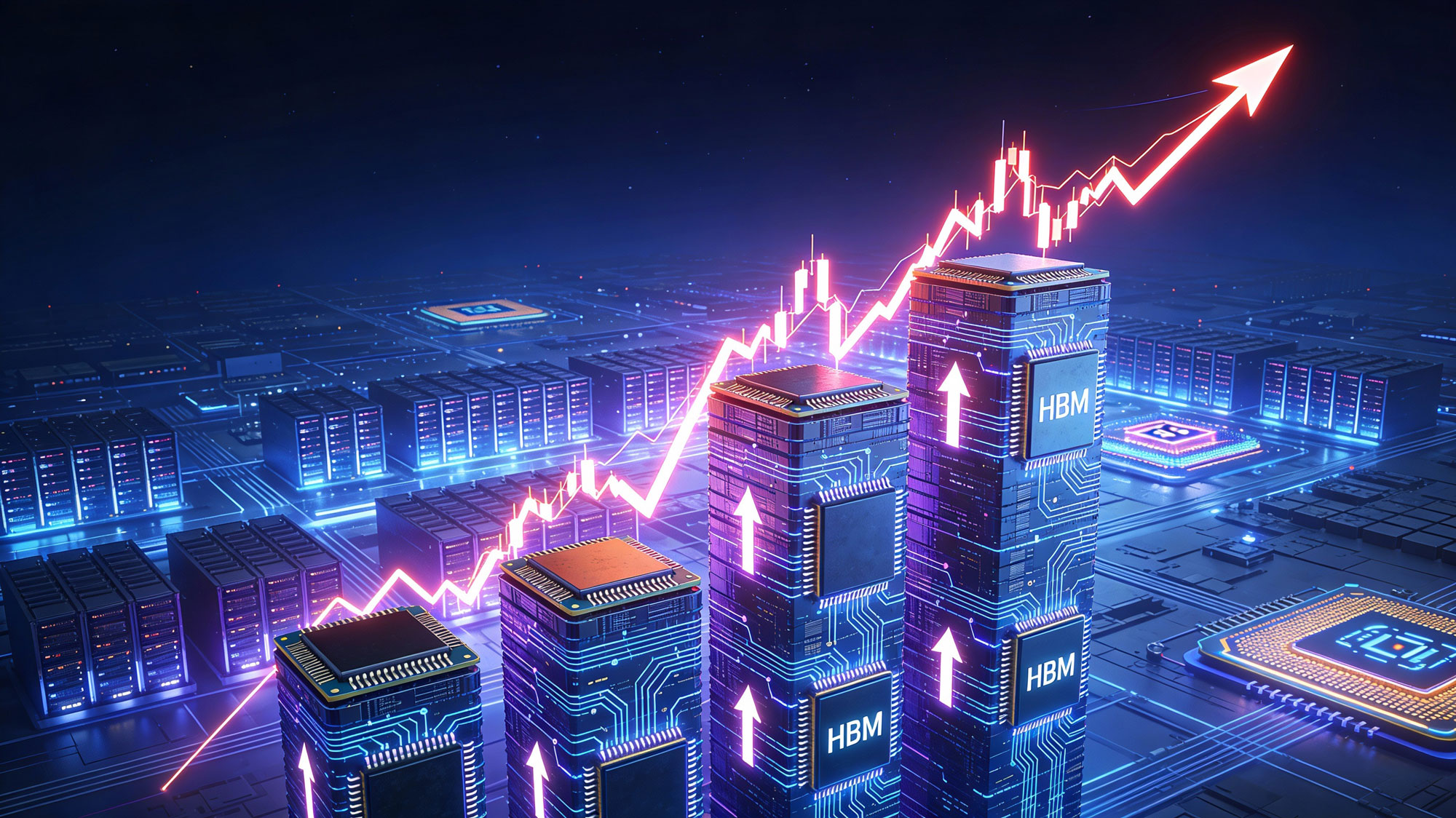
To power large AI models, GPU makers surround their processors with stacks of high‑bandwidth memory (HBM), which is far more complex and capacity‑intensive to manufacture than the DRAM used in typical PCs and smartphones. Micron notes that every bit of HBM produced effectively displaces about three bits of conventional memory, so ramping HBM for AI leaves fewer chips for consumer devices, and server‑class and HBM customers are favored because they are less price‑sensitive and offer faster growth. This has already led Micron to exit some consumer PC memory lines and is contributing to a rapid jump in retail RAM prices that has surprised PC builders.
AI researchers and chip designers describe a “memory wall,” where ever‑faster GPUs are bottlenecked by the amount and speed of memory they can access, especially for large language models that are more memory‑hungry than earlier AI architectures. More and faster memory allows larger models, more concurrent users and bigger context windows that let chatbots maintain longer, more personalized conversations, prompting some startups to experiment with massive memory systems that avoid HBM in favor of cheaper alternatives while still targeting very large total capacities.
The shortage is rippling into the broader electronics market: memory now represents a significantly larger share of laptop hardware cost than it did in early 2025, and companies like Dell have warned that higher component costs will eventually show up in end‑user prices even as they try to optimize configurations. Apple has been more muted about the impact so far, but analysts expect some pressure on margins or pricing as the crunch continues. Nvidia, now the largest buyer of HBM, is also under scrutiny about how its AI‑driven memory demand will affect pricing for gaming GPUs and consoles, with CEO Jensen Huang stressing that the industry will ultimately need many more memory factories to satisfy AI requirements.
Micron says that, at best, it can cover only about two‑thirds of some customers’ medium‑term memory needs and that its 2026 output is effectively fully booked, even as it invests in new fabs in Idaho and New York that will not produce chips until 2027–2030. With SK Hynix reporting that its 2026 RAM capacity is already committed and Samsung forecasting nearly tripled operating profit on the back of high memory prices, the consensus in the chip industry is that the AI‑driven memory squeeze will persist for several years.
Market Update – DRAM
Prices on the most commonly used HPE memory modules have climbed nearly 130% since July 2025, and are now more than double where they were in November 2025, reflecting classic supply‑and‑demand pressure. Major manufacturers Samsung, SK Hynix and Micron are unable to ramp output fast enough to keep pace with rapidly growing requirements, and some industry commentary suggests their 2026 production is effectively fully committed, with meaningful capacity relief not expected until additional fabrication plants start production in 2027.
Market Update – SSD
Solid‑state drives are now encountering similar strain, driven by the same underlying force: a surge in orders from organizations accelerating their artificial intelligence roadmaps. As a result, SSDs that are not already on the shelf are increasingly subject to extended lead times, with new orders often projected to require roughly three to six months from purchase to delivery.
Article Credit: https://www.cnbc.com/2026/01/10/micron-ai-memory-shortage-hbm-nvidia-samsung.html